

The Renters' Rights Act 2025 is the biggest change to England's private rented sector in a generation. For letting agents, this is not just a compliance update. It is an operational reset.
From 1 May 2026, the first phase of the Act takes effect across both new and existing private tenancies in England. That means the end of Section 21, the end of fixed-term assured shorthold tenancies, a move to periodic tenancies, new rent increase rules, restrictions on rental bidding, tighter rules around rent in advance, and stronger tenant protections.
This guide explains what changes on 1 May 2026 and what comes later. For the operational checklist of what your agency should be doing right now, see our companion guide: Renters' Rights Act checklist for letting agents: what to do before 1 May 2026.
Who Does This Apply To?
Scope & Applicability
The Act applies to the private rented sector in England only — not Wales, Scotland, or Northern Ireland. Phase 1 changes apply to both new tenancies created on or after 1 May 2026 and existing tenancies already in place. There is no grandfathering of existing fixed-term arrangements. Social housing tenancies are not directly affected by most provisions.
What Is the Renters' Rights Act 2025?
The Act received Royal Assent on 27 October 2025. It abolishes Section 21 "no-fault" evictions, replaces the current tenancy structure with periodic assured tenancies, strengthens protections against unfair practices, and creates a more consistent system for landlords, tenants and enforcement bodies.
For letting agents, the important point is this: it affects the whole tenancy lifecycle, from first advert to possession.
Implementation Timeline
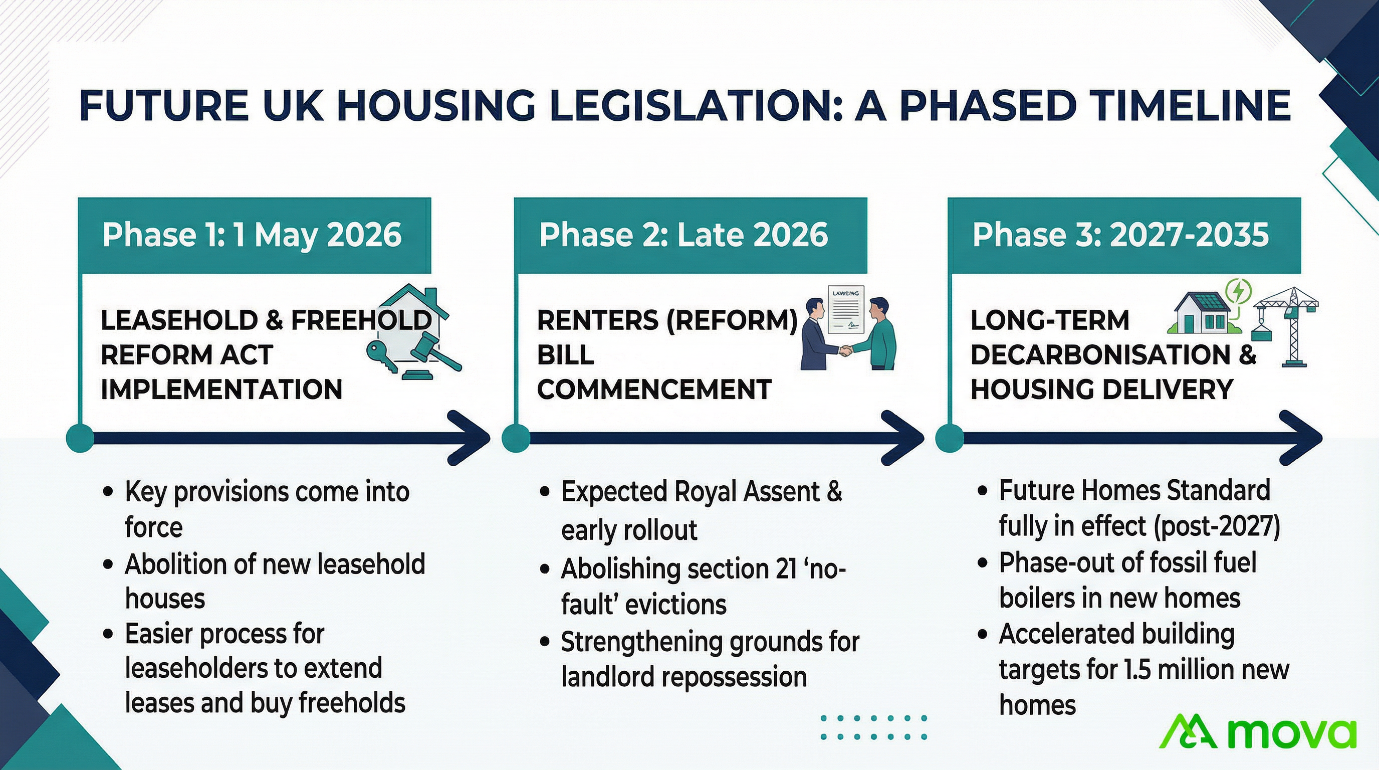
What Changes on 1 May 2026
Section 21 is abolished
Landlords can no longer serve a Section 21 notice. Any existing AST becomes an assured periodic tenancy from 1 May, and possession relies entirely on the Section 8 process.
Teams will need to understand which grounds apply, what notice periods are required, and what evidence landlords need to retain before any possession advice is given.
Fixed-term tenancies are replaced by periodic tenancies
All existing ASTs convert to assured periodic tenancies, and new fixed-term ASTs can no longer be created. Tenants can end the tenancy with two months' notice. Landlords must give four months' notice using the appropriate Section 8 ground.
Rent increases move to a single statutory process
Rent increases must follow the Section 13 process: at least two months' notice (up from one month), and no more than one increase every 12 months. Tenants can challenge proposed increases at the First-tier Tribunal.
Rental bidding is banned
Landlords and agents must not ask for, encourage or accept offers above the advertised rent. Every listing must state a clear asking rent, and that figure is the ceiling. Civil penalties start at £4,000 for inviting or accepting offers above the advertised rate.
If negotiators are used to "best and final" conversations on rental listings, those workflows must stop.
Rent in advance is restricted
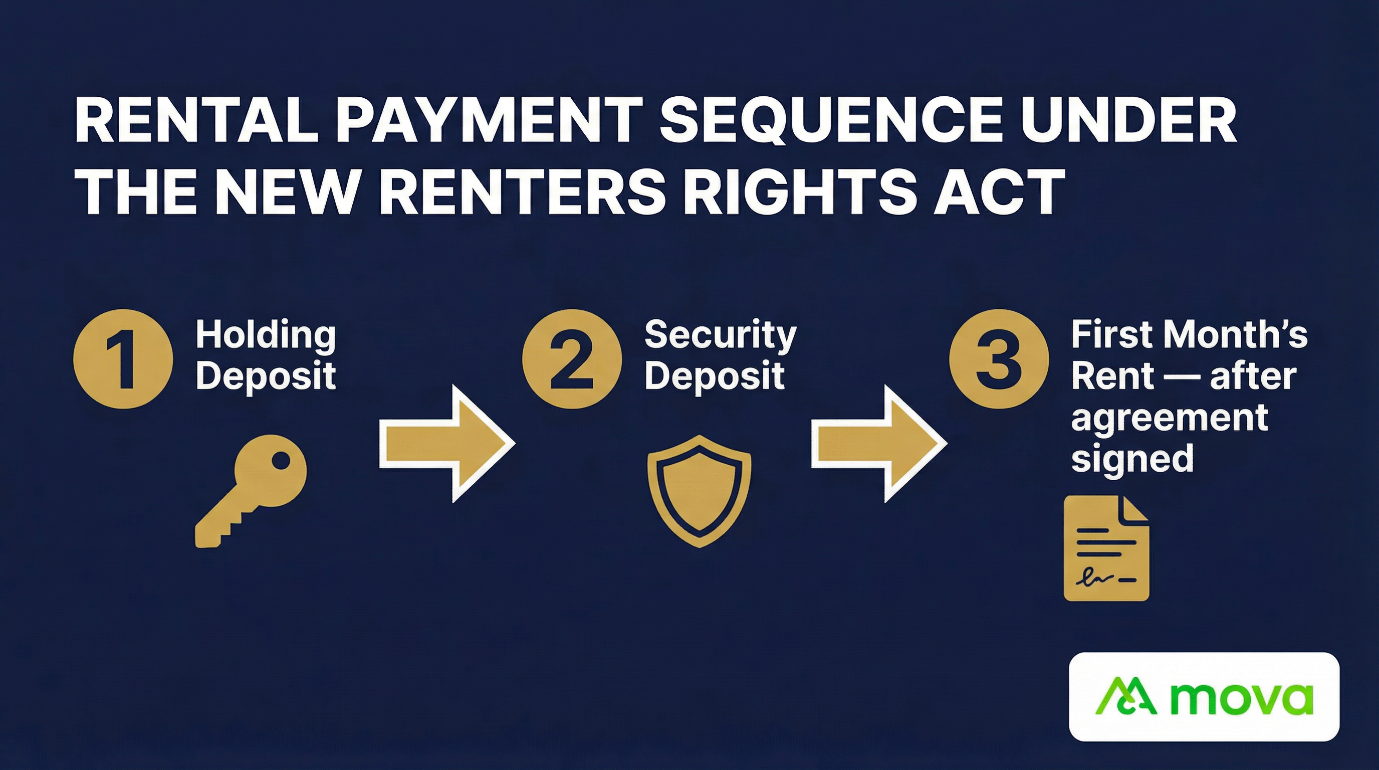
Agents and landlords cannot require more than one month's rent in advance. Rent cannot be taken before the tenancy agreement is signed by all parties. Propertymark sets out a three-step payment sequence: confirm holding deposit, confirm security deposit, then — only once the agreement is executed — offset the holding deposit and request the balance of the first month's rent.
Tenants gain a right to request a pet
Tenants can request in writing to keep a pet. Landlords must respond within 28 days and cannot unreasonably withhold consent. Where a pet is approved, the landlord can require the tenant to take out insurance covering pet damage risk.
Discrimination against renters with children or on benefits becomes unlawful
It is now illegal to discriminate against prospective tenants because they have children or receive benefits. Civil penalties start at £6,000 per breach.
What Are the Penalties?
The enforcement regime is tougher than many agents may expect. Local authorities can pursue formal enforcement without issuing informal warnings first and are under a statutory duty to enforce the new rules.
Civil penalties up to this amount for:
- Failing to provide a written statement
- Failing to serve the information sheet on existing tenants
- Attempting to let on a fixed term
- Rental discrimination (benefits or children)
Civil penalties up to this amount — or criminal prosecution — for:
- Knowingly relying on an unsatisfiable possession ground
- Reletting within the 12-month restricted period
- Unlawful eviction and harassment
- Repeat or continuing breaches
| Breach / Offence | Starting Penalty |
|---|---|
| Marketing without stating the proposed rent | £3,000 |
| Attempting to let for a fixed term | £4,000 |
| Failing to issue written statement within 28 days | £4,000 |
| Failing to provide existing tenants with information sheet | £4,000 |
| Inviting or accepting offers above stated rent | £4,000 |
| Serving a possession notice outside the Section 8 process | £6,000 |
| Discrimination (benefits or children) | £6,000 |
| Reletting within the 12-month no-let period | £25,000 |
| Knowingly relying on an unsatisfiable ground | £30,000 |
| Unlawful eviction and harassment | £35,000 |
Does This Apply to Existing Tenancies?
Yes. All existing ASTs — fixed-term or already periodic — convert to assured periodic tenancies on 1 May 2026.
Landlords with existing written agreements do not need to re-issue a new tenancy agreement. Instead, they must provide tenants with a government-published information sheet:
Deadline: 31 May 2026
Serve the government-published information sheet on all existing tenants. The government has committed to publishing the final version in March 2026. Failure to serve it carries a starting penalty of £4,000 per tenancy.
For existing tenancies without a written agreement, landlords must provide both the information sheet and a written statement of terms.
For new tenancies created on or after 1 May 2026, a written statement must be provided before the tenancy is entered into. Draft regulations published in January 2026 set out what it must include: names of landlord and tenant, property address, rent amount and frequency, start date, and information about rights and obligations under the Act.
What Changes Later?
The PRS Database and Landlord Ombudsman arrive in late 2026. The database will require landlords to register themselves and their properties. The Ombudsman will provide dispute resolution as an alternative to court.
Awaab's Law is extended into the PRS and the Decent Homes Standard is applied to all rental properties — a process running from 2027 through to 2035.
For landlord communications, the strongest approach clearly separates what changes on 1 May 2026 from what follows later. Conflating all phases creates confusion and inaction.
Why This Matters Commercially
The Renters' Rights Act will reshape how landlords choose agents. Over the next year, landlord retention and new instructions will increasingly depend on which agencies can demonstrate operational readiness: compliant documentation, defensible possession processes, structured rent review workflows, and clean applicant screening.
The agencies that treat this as an operational project — not a legal footnote — will be the ones that strengthen their position.
For the step-by-step operational checklist, see: Renters' Rights Act checklist for letting agents: what to do before 1 May 2026.